Every item around us has its own number. Here's how we got to that point
A barcode on milk, a style code on sneakers, a QR code at the checkout — we are surrounded by codes and have long grown used to them. We look into where product labeling came from and why no market in the world can function without it.
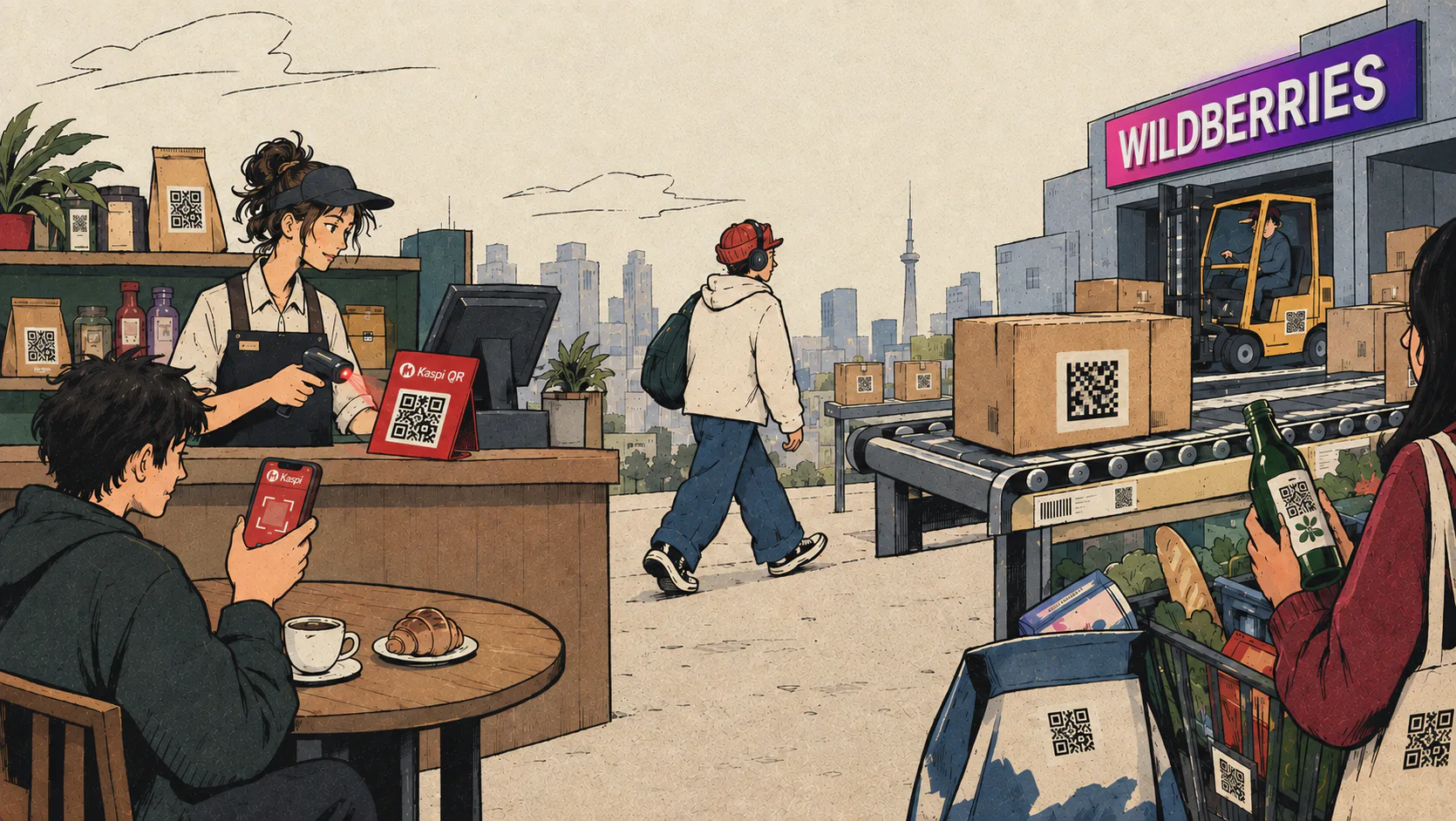
You're standing at a coffee shop checkout, take out your phone, point the camera at a small square on the screen, and a second later the money is already gone. Kaspi QR has become so firmly embedded in life that we don't even notice what's happening: the camera read the encrypted data, the system decrypted it, and transferred the money. All in one and a half seconds, without a single thought about how it works.
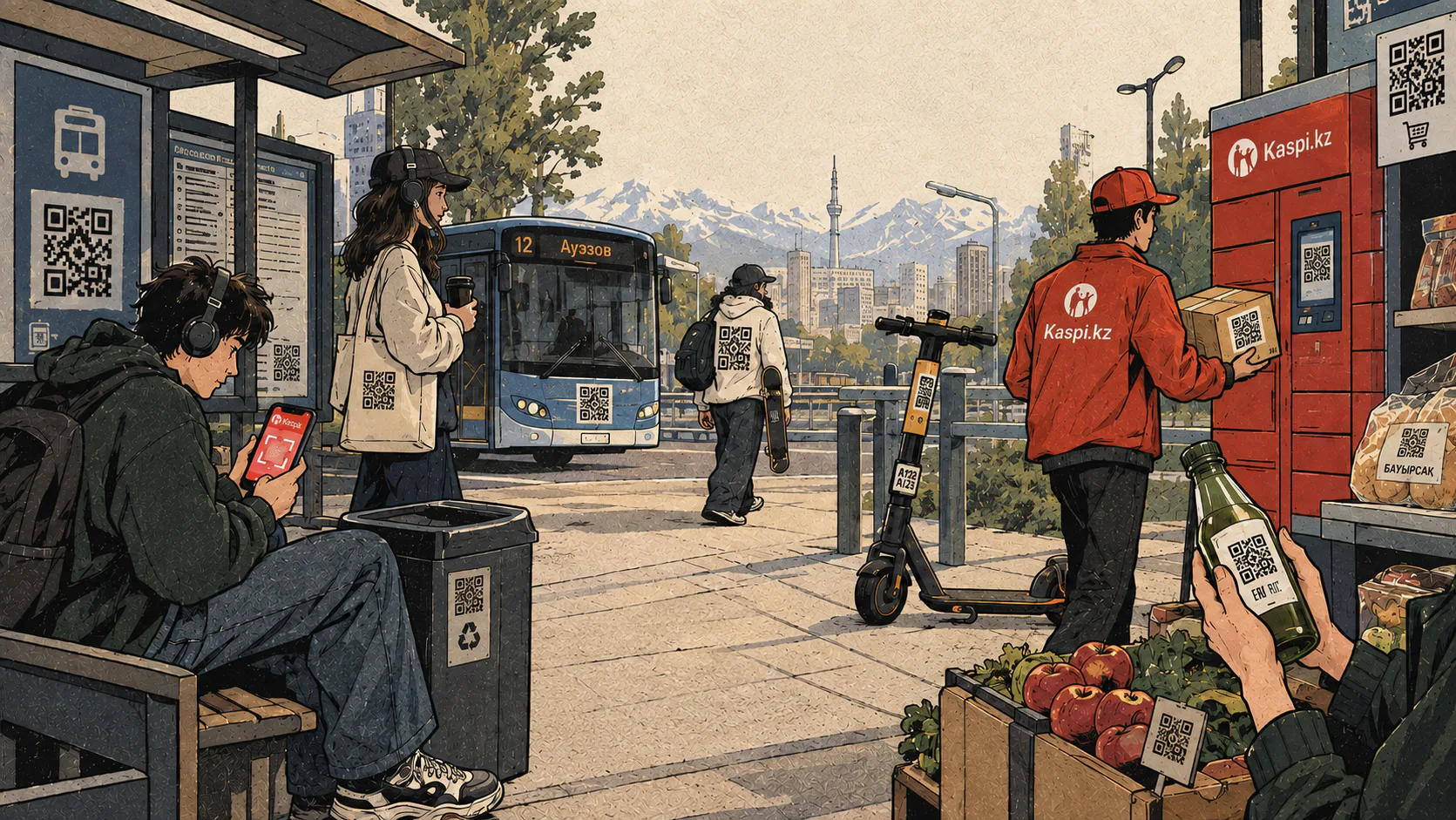
And now look wider. By the same principle, but only the product itself is encrypted — the barcode on a packet of coffee that you just took off the shelf. Who produced it, when, whether it's legal — all of this is also "hidden" in the black-and-white stripes and squares. We live in a world where literally everything around us has its own code: passport number, phone number, barcode on milk, DataMatrix on a box of medicines. Your orders from Wildberries arrive thanks to these systems.
How did humanity even arrive at the idea of "encoding" a product into stripes and little squares?
Once, everything was simple: a manufacturer would glue a paper tag onto a product or stamp it with a name, a date, a batch. But in the 20th century, trade began to grow at such a pace that cashiers could no longer keep up with entering every item by hand, and warehouses were drowning in boxes that were counted by eye.
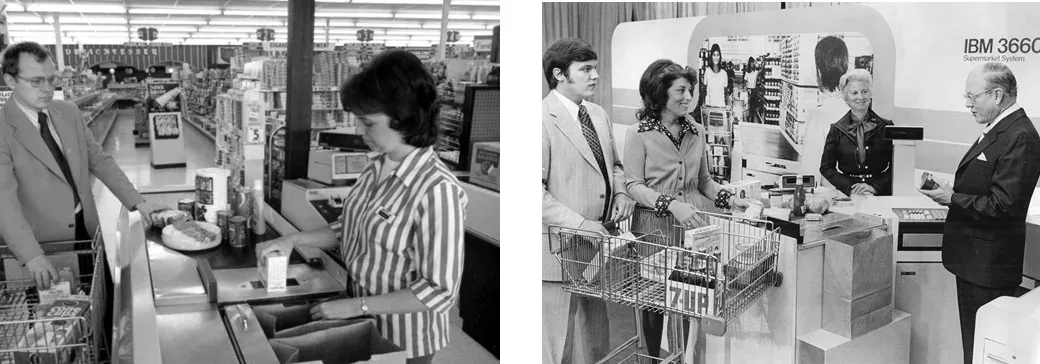
The idea was born by chance: in the late 1940s, a graduate student named Bernard Silver overheard a store manager asking a professor to devise a system that would read the product by itself at the checkout. The professor waved him off, but Silver began to think. Together with his friend Norman Woodland, they set to work, and one day Woodland, sitting on a beach and drawing with his fingers in the sand, turned Morse code into graphic stripes. That is how the prototype of the barcode was born — and on June 26, 1974, in a supermarket in Ohio, a product was scanned for the first time: it was a pack of Wrigley's chewing gum.
Take any item or packaging with a barcode at home and turn it over. You will see a barcode with 13 digits under the stripes. It seems like just a random set of numbers, but in reality each digit has its own meaning.
The first 2-3 digits: this is the country code where the manufacturer is registered (not necessarily where the product was made, but specifically where it is registered). For example, 460–469 Russia, 480 Kazakhstan, 690–699 China. The next few digits: the unique number of the manufacturing company, assigned to it by the GS1 association (an international organization that hands out codes so that two different products in the world never have the same barcode). Then: the code of the specific product: this very chocolate bar, this very weight, this very packaging. And the last, thirteenth digit is the check digit: it is calculated using a special formula from all the previous digits, and it is needed so that the scanner immediately recognizes when a code has been read with an error or is damaged.
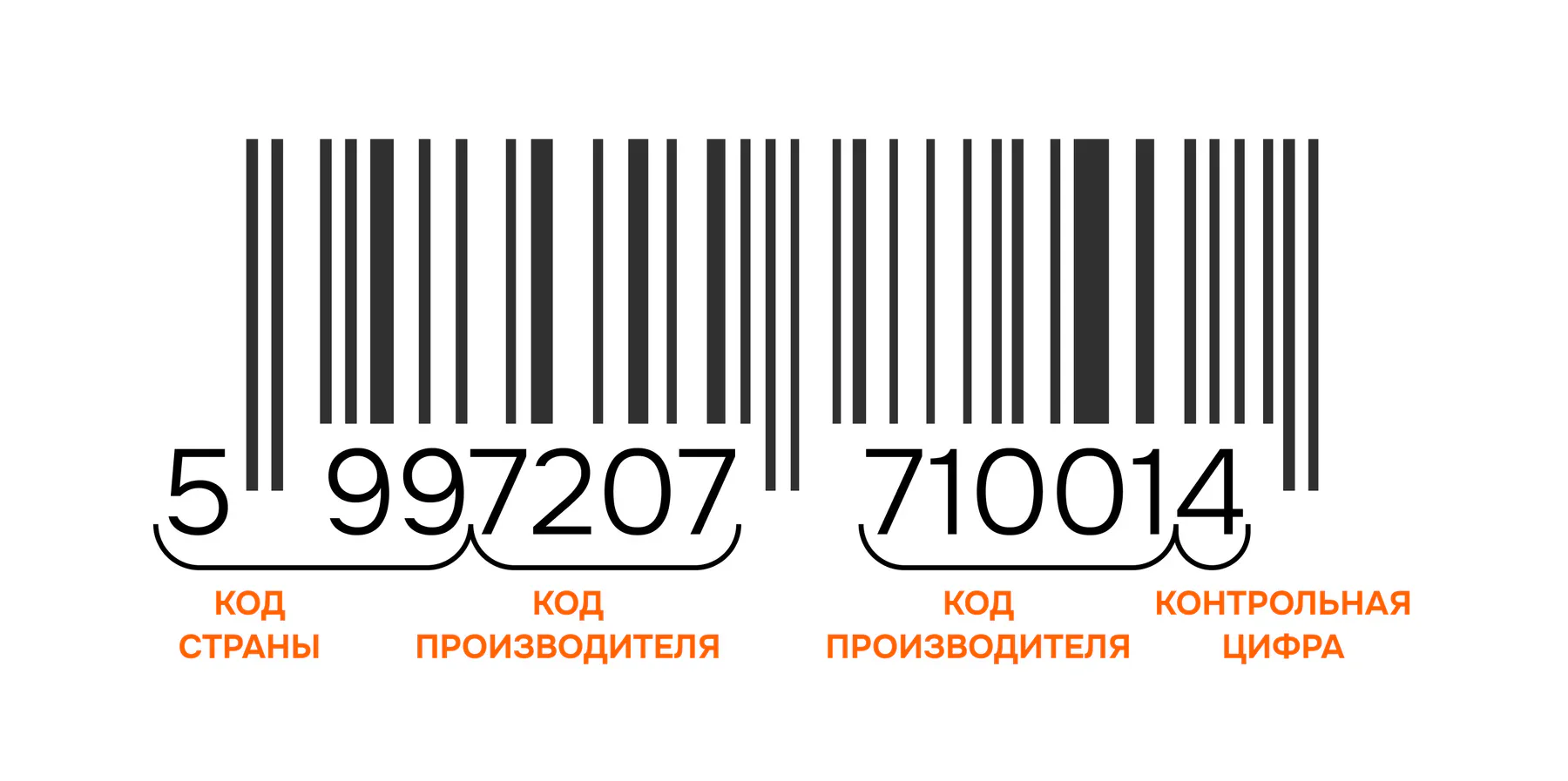
Stripes of different widths are a graphic representation of the digits 0-9, which a laser reads in a fraction of a second instead of you having to dictate them out loud. In other words, a barcode is not a picture in and of itself, but simply a faster way to enter those same 13 digits.
The second generation: when the stripes of the barcode became little squares
The striped barcode was a revolution, but it had a significant limitation: it could hold very little information, at most a couple dozen characters. For a checkout counter that was enough, but for logistics, manufacturing, and medicine, it no longer was. Something was needed that could carry more data.
The solution came from Japan. In the early 1990s, engineers at Denso Wave faced a problem: their factories were using dozens of different codes, employees got confused, and the codes themselves contained too little useful information. Engineer Masahiro Hara took on the challenge. Legend has it that inspiration came to him over lunch, during a game of Go. He looked at the board with its stones and realized: the code had to be two-dimensional — not stripes, but a grid. And so, in 1994, the QR code was born: Quick Response.
The square format held dozens of times more data than its striped predecessor, and it could be read from any angle and even when damaged. The technology quickly broke out beyond Toyota's factories and began to conquer the world.
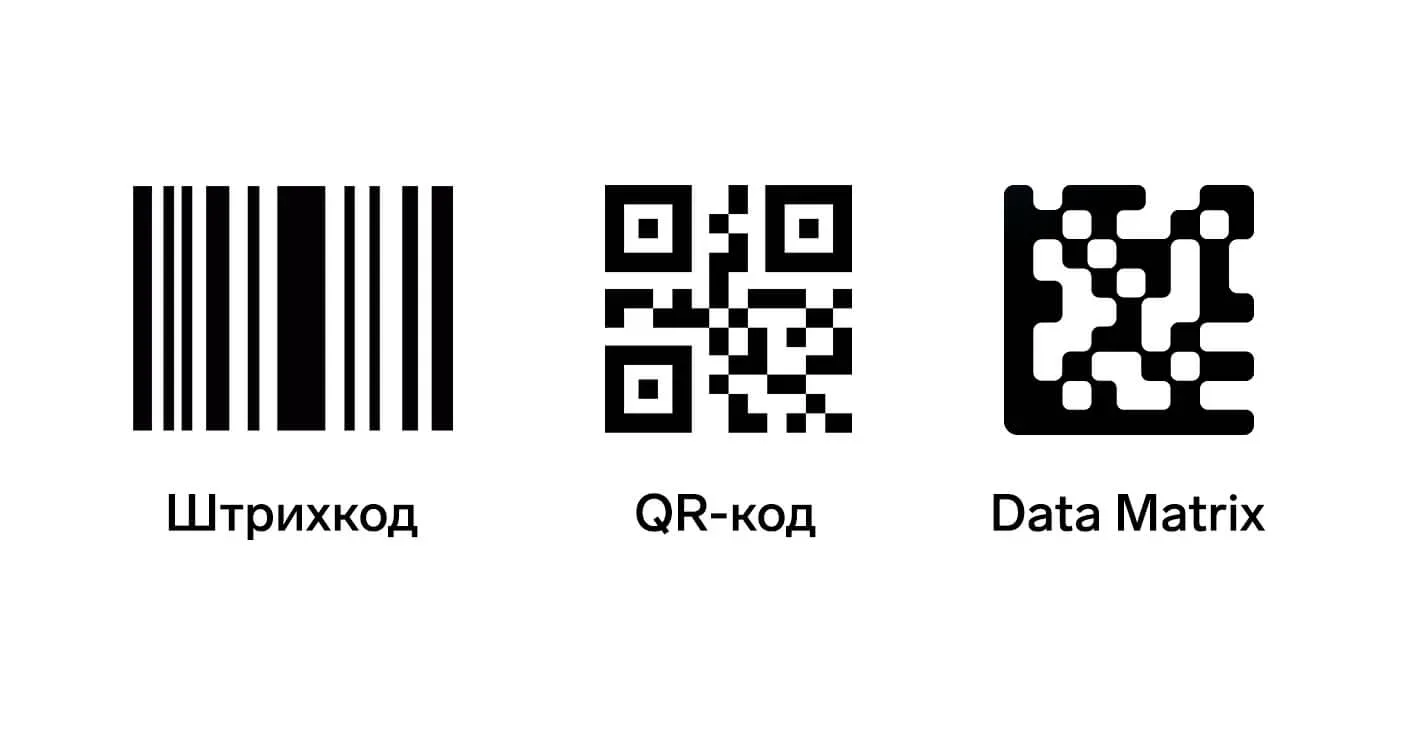
QR codes work on a principle similar to barcodes, only far more elegant. Instead of a single line of stripes, a two-dimensional grid of black and white squares is used (these are called modules). Each square is a zero or a one, meaning the data is encoded in binary form, just like in an ordinary computer. That is precisely why such a code holds not 13 digits but hundreds of characters - an entire text, a link, or a set of data about a product: the manufacturer, the date of manufacture, the batch number, the expiration date.
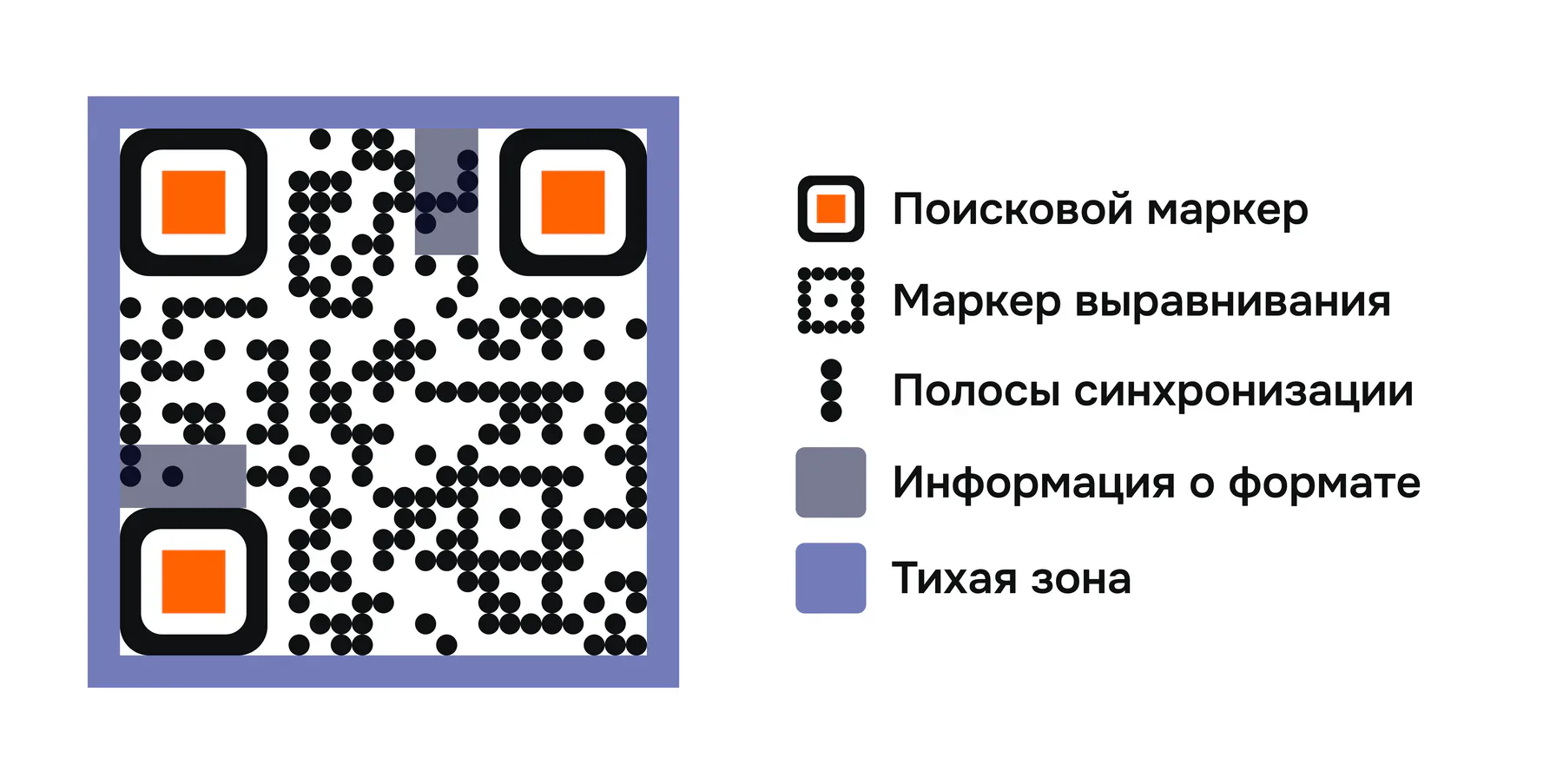
And the three large squares in the corners of a QR code are not decoration. The scanner needs them to figure out where the top and bottom are, and at what angle the code was photographed — that is exactly why you can scan a QR code even upside down or from the side, and it still registers.
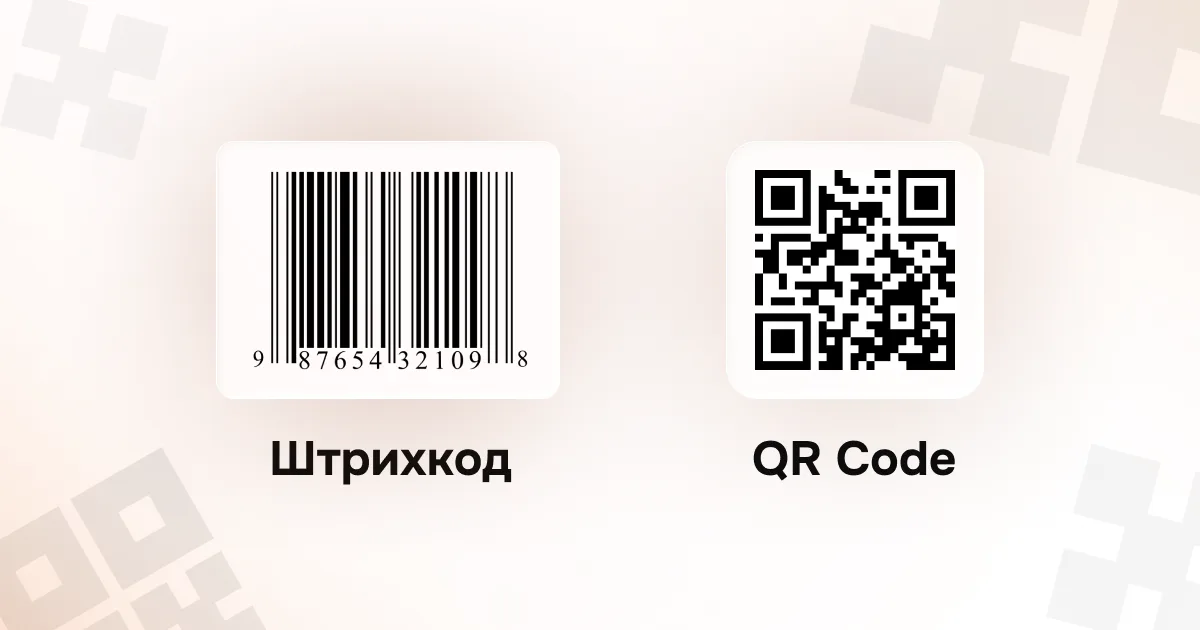
If you compare the two codes directly, the difference becomes obvious. A barcode is just one line of data, holds around 20-30 characters, and it has to be aimed precisely and at the right angle, otherwise the scanner won't read it. A QR code: thanks to its two-dimensional grid, it holds hundreds of times more information, can be scanned from any side, and keeps working even if part of the code is smudged or damaged. Essentially, a barcode is a single line of text, while a QR code is an entire website page packed into a little square.
So what is DataMatrix? And what is it for?
If a QR code is so good and holds so much data, and can be scanned from any angle, why even invent something else? It comes down to size. A QR code works perfectly on a coffee package or on a phone screen, where there is space. But picture a label on a packet of pills or on the sole of a sneaker, where every millimeter counts. That is exactly what DataMatrix is for: it holds the same amount of data in a much smaller area and withstands label damage better.
At first glance there is no difference, since it's the same principle of black-and-white square modules, only the layout is different. But it is precisely this difference that ultimately determined which code marks goods all over the world, from medicines to clothing.
"DataMatrix is not a competitor to the QR code, but its more compact and more resilient relative. That is exactly why it was chosen to mark billions of products."
In the next article, we'll take a detailed look at DataMatrix: how the code is structured from the inside, what exactly is encrypted in it, and why governments around the world, including Kazakhstan, chose it for their national product labeling systems.