
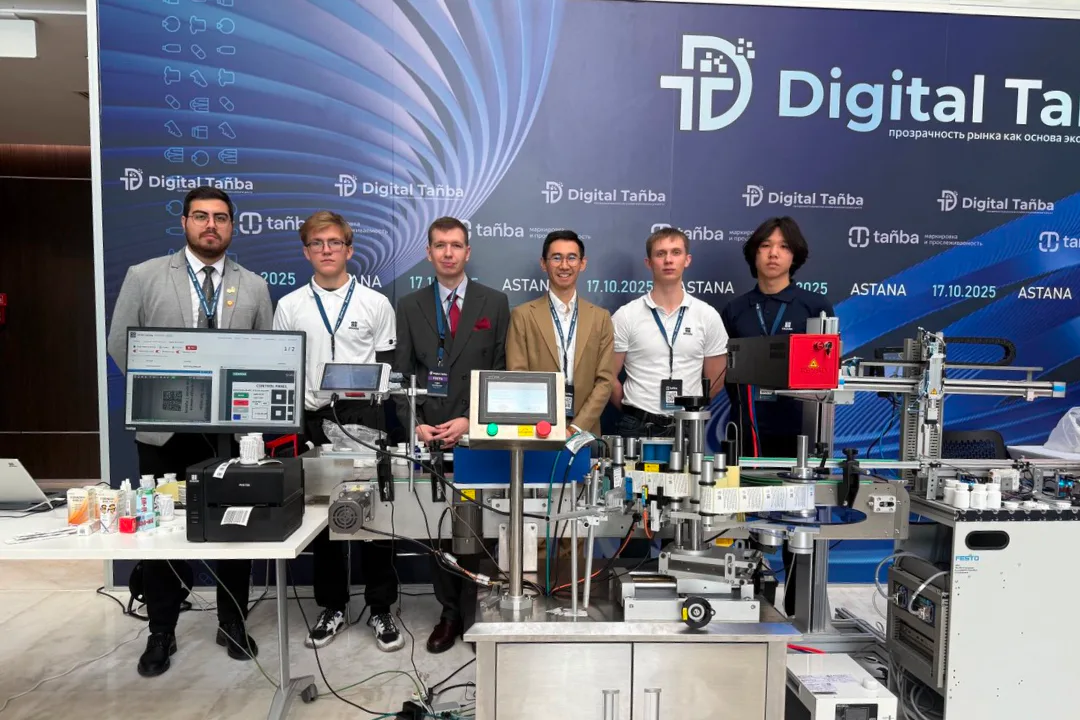
How the DMARK team integrates marking into its processes step by step and builds industry expertise
The DMARK project was launched by young guys from Kazakhstan — Ayan Ishmukhambetov and Mark Tsymbalyuk. Today DMARK is a domestic company from Kazakhstan, and its team numbers 12 people. It is important for the team to develop the market from within — to grow their own specialists and, together with them, build sustainable expertise in automation.
"Sometimes technology projects are born not from loud presentations, but from down-to-earth conversations. A manufacturer talks about their line, a Logistician about deadlines, an Engineer about the fact that stopping the conveyor costs too much. And at some point it becomes clear: there is a process that can be made more precise, faster, and calmer — if you approach it with engineering logic and respect for real production."
The DMARK project was launched by young Kazakh guys — Ayan Ishmukhambetov and Mark Tsimbalyuk. Today DMARK is a domestic company from Kazakhstan, and the team employs 12 people. For the guys, it is important to develop the market from within — to grow their own specialists and, together with them, build sustainable expertise in automation.
How it all began: a small core that simply had to work
The first versions of DMARK were built gradually. At the start, the team had no goal of creating "everything at once." On the contrary — the task was to build a compact product that would cover what mattered most and help the enterprise integrate marking into its familiar working rhythm without unnecessary stress. The first features were simple and practical: - ordering codes, - preparation for application, - reporting. The main principle — no overload and no unnecessary screens. According to the team, this is exactly how an industrial product should begin: with a clear result that can be verified in real work.
The First Client: The Trust That Became a Growth Point
But DMARK's real story began when the first client appeared. A major role was played by the first customer who, despite the risk of an early stage, entrusted the automation of the process to a domestic team. In a market where many were used to looking to well-known foreign players, this step was truly bold. And for DMARK it became a moment of responsibility: if you have been trusted with production, you are obliged to make sure the implementation goes smoothly and the solution works reliably. DMARK's first clients: - LLP SULTAN - PC "Firma "Kyzylmai"" - LLP Dosfarm - LLP Lekos - LLP "PLP "Zhanafarm"" It was precisely this stage that helped the team form its key understanding: the market expects not just a "program", but an integrator that takes on the combination of "software + production + equipment + people".
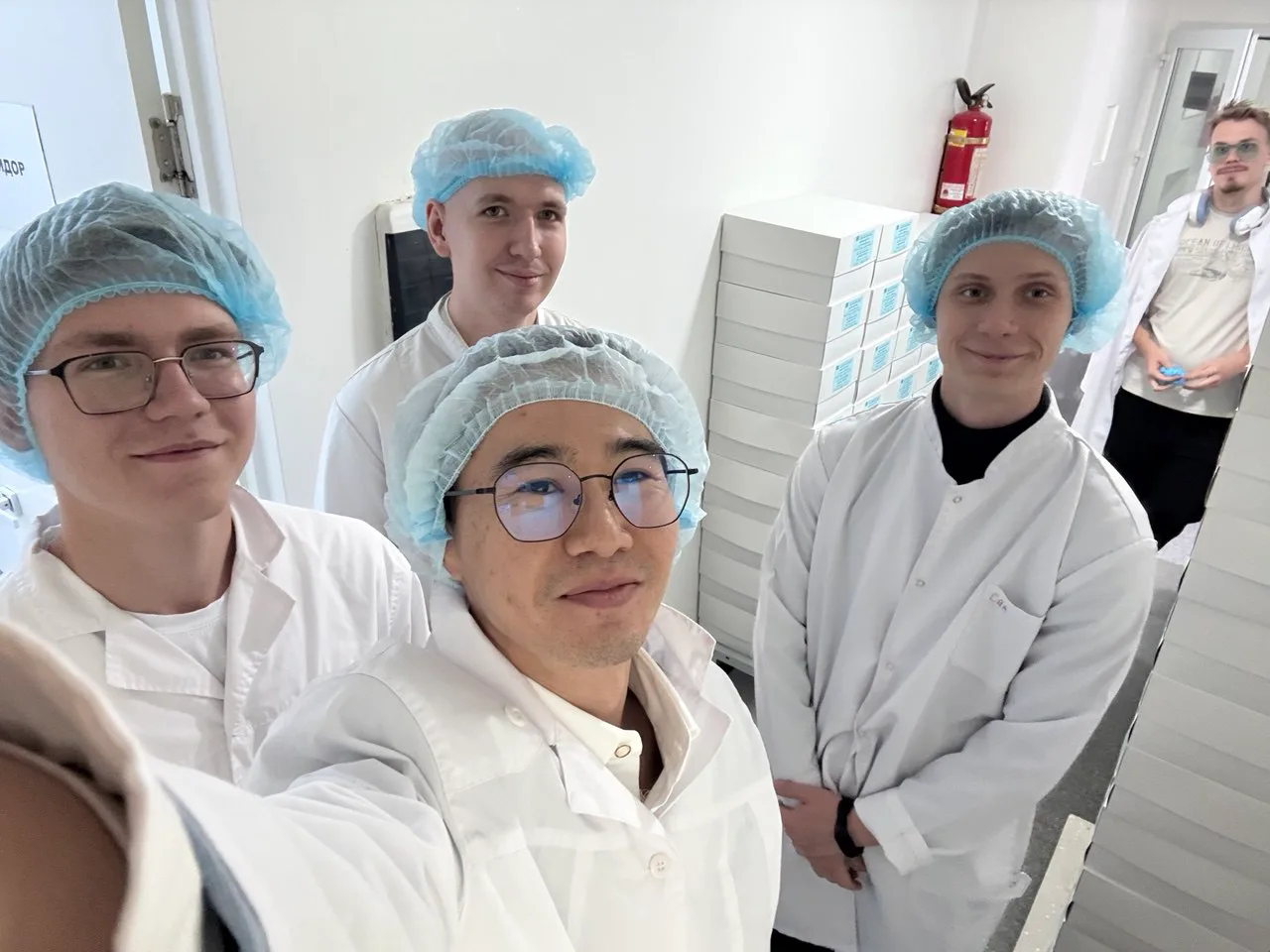
Experience before DMARK: why the team thinks like integrators from the very start
Ayan and Mark didn't come into marking "from scratch". Before launching DMARK, they had experience developing technology solutions in a banking environment, where processing millions of transactions was required, and where stability, systematic thinking, and the ability to implement solutions so that the business keeps running smoothly are highly valued. At various times, the team took part in creating: - anti-fraud systems for Сбербанк, - an anti-fraud center for the National Bank of the Republic of Kazakhstan, - a mobile application for Банк ЦентрКредит, - as well as projects to automate production processes for a company. This experience shaped the key mindset that later became the foundation of DMARK: solutions must be implemented so that the business continues to operate stably, without failures or downtime, and the system withstands load, growth, and real-world operating scenarios.
The DMARK principle: don't change what already works
One of the key factors that hooks clients on DMARK sounds very simple: “We don't change the production process.” The team doesn't come with “let's replace everything,” but with an audit: - what's already installed at the production site, - what actually works, - what can be improved without replacement If the equipment performs a similar task — it is used. If it can be upgraded — it is upgraded. If a section is truly missing — they offer options. And they offer honestly: from affordable and compact solutions to high-performance lines. Because every enterprise has its own scale, its own speeds, and its own constraints.
The path to equipment: at first they asked for tests, but there was almost no market for “pilots”
When DMARK began to work deeper, an important question came to light: software alone is not always enough for confident implementation. Enterprises asked about equipment — and that was logical. You need to understand what to print with, how to apply it, and how to control quality. According to the team, at first they tried to go through the local market: they approached distributors of European industrial equipment and asked for test units — in order to understand applicability in practice, not just in words. But reality turned out to be not so simple: many suppliers are ready to sell, but not ready to provide equipment for testing. The “pilot” format was encountered rarely. And a young company at the start did not have large capital to buy expensive industrial equipment “on a trial basis” and keep it in a warehouse for the sake of an experiment. And this was a high risk for further development. And then DMARK chose a different path — more market-oriented, but engineering-driven: to start looking for analogues and alternatives on its own.
China: the search for analogues that turned out to be a discovery
The team began to carefully study the Chinese market. Not in the format of “let’s find something cheaper,” but in the format of “let’s find something comparable in terms of tasks, speed, and quality.” As a result, the DMARK team went to China to specialized exhibitions and to manufacturers. Several weeks, dozens of meetings — They studied: - secondary printing, - applicators, - printers, - laser solutions, - machine vision, - conveyor components. And here the team made a discovery that later became one of the meanings of DMARK: modern Chinese solutions in a number of applied scenarios are in no way inferior to familiar European equipment, and sometimes win in flexibility of integration and affordability. This allowed DMARK to form a strong principle: not to be tied to one country, a brand, or a “showcase” name. But to select a solution for the client’s task — engineering-wise and honestly. The result of this trip was partnerships with modern, technologically advanced manufacturers, as well as signed contracts for the representation and distribution of SmartMore machine vision equipment, iDPRT printers, and other solutions.
DMARK Laboratory: “Show Us Live” — and the team did it
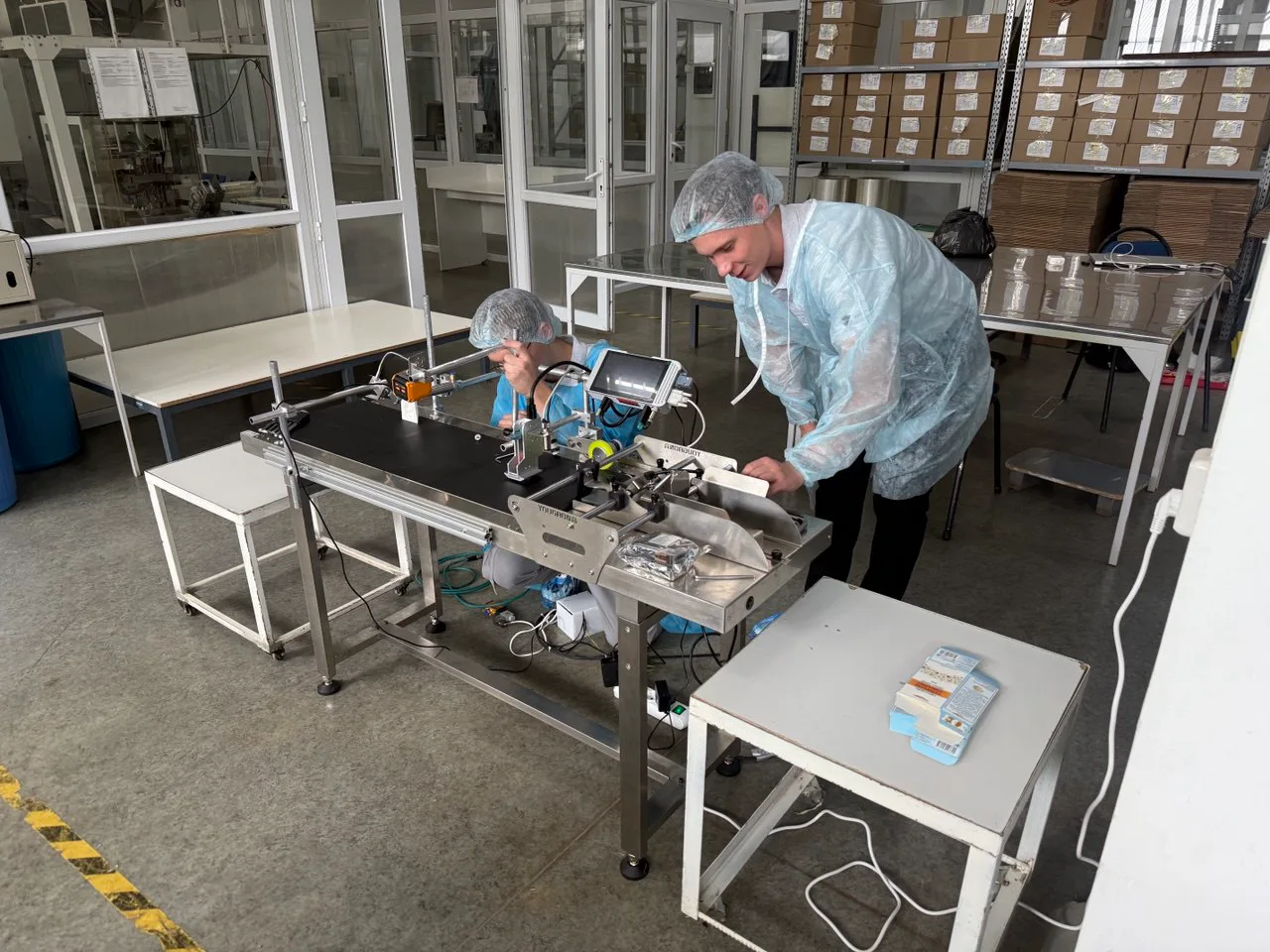
Over time, the market demand became very clear: manufacturers want to see solutions with their own eyes. Not only to listen, but also to touch. Not only to believe, but also to test. That's how the DMARK laboratory appeared at the Polytechnic College. And there is an important detail that the team emphasizes separately: “all equipment for the laboratory was purchased in stages, entirely from the revenue from software sales. Without large capital ‘at the start’. Without external investments. Step by step.” Today the laboratory is fully equipped so that manufacturers can: - come and see the solution visually, - test the equipment, - compare options, - receive a technical conclusion, - make a decision more calmly — before purchasing for production. The laboratory has become more than just a room. It has become an infrastructure of trust.
College and personnel: Almaty Polytechnic College as part of the strategy
DMARK did not stop at implementations and deliveries. The company went further — into education. The team is developing cooperation with Almaty Polytechnic College. The idea is simple: “enterprises need specialists who understand industrial automation not from pictures and not from theory.” Students are taught practical things. Applied scenarios. Real production requirements. In effect, DMARK helps build the talent pool that enterprises will need tomorrow.
The product has grown: from three functions to a modular platform
Over 2.5 years, DMARK has changed a great deal. It is no longer a “small program”. Today the product is evolving as a modular system: - labeling automation, - expansion toward warehousing, - web interfaces, - mobile solutions, - movement toward the logic of a full-fledged ERP platform. Important: DMARK openly says that “ERP/WMS is not ready yet.” But the direction is obvious — the company is heading toward a large platform where labeling becomes part of a managed process of “production–warehouse–movement–control”.
Clients Became Partners
Another key growth factor is customer relationships. Over time, working with existing clients evolved into a "Partnership" format: some clients help purchase test units of equipment so that DMARK can test them in the lab, provide an assessment, and select the optimal configuration. This rare model speaks to trust. And to the fact that both sides care about results, not formalities.
Acceleration and Victory: Recognition That Added Confidence
At a certain stage, DMARK underwent acceleration and won/received award recognition. The acceleration program of Terricon Valley in Karaganda in 2024. Where the victory was - a grant from Yandex. As the guys say: “For the history, this is an important part: it shows that the project is developing not only within its clients, but also in the entrepreneurial ecosystem.”
Support from the Center for the Development of the Digital Economy: when domestic companies are given a platform and a voice
DMARK separately thanks the Center for the Development of the Digital Economy for its support of domestic integrators and its attention to local companies that are developing solutions inside the country. An important marker of recognition is a letter of appreciation from the Ministry of Trade and Integration of the Republic of Kazakhstan, as well as participation in exhibitions and conferences where the team can showcase its solutions and share its practices. This gives domestic companies a chance to be heard and noticed — and helps the market mature faster.
Instead of a Finale: The Story Continues
DMARK is not a story about "overnight success." It is a story about consistency. Two people started with a small product. Then clients came -> engineering expertise emerged -> equipment and partners -> a laboratory -> a college and workforce training -> a team of 12 local specialists. And today DMARK continues to grow — as a domestic integrator and developer that helps enterprises implement marking carefully, without disrupting the production rhythm, and with a confident understanding of what is being done at each step and why.