

How Omega-Spetsii Implemented Thermal Transfer Marking Directly on Its Spice Packaging Line
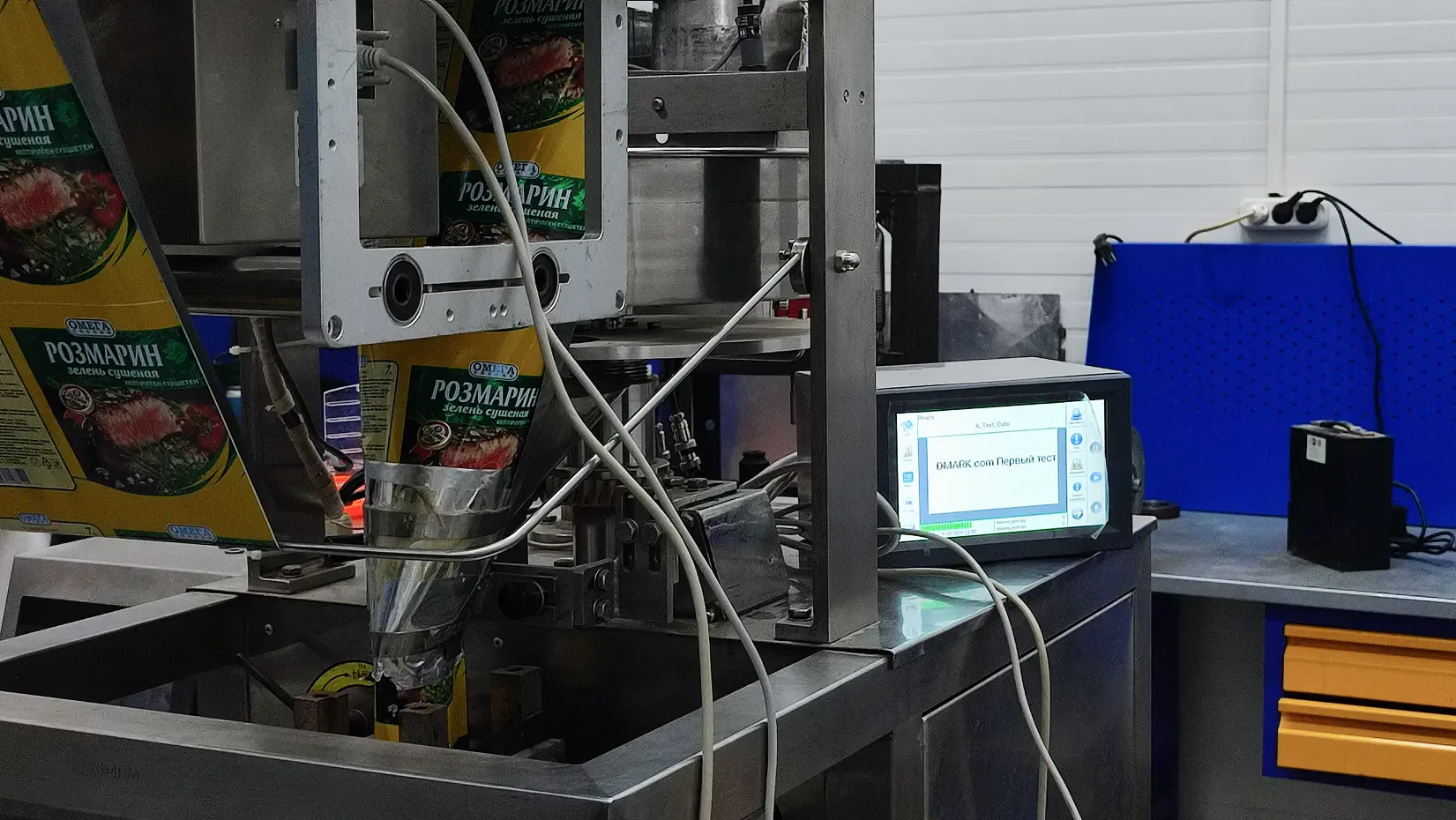
A Kazakh manufacturer of seasonings and spices has integrated a thermal transfer printer into its existing packaging line: codes and dates are printed directly onto the flexible packaging, with no equipment redesign.
About the Client
Omega-Spices LLP has been operating since 1998. The company develops, produces, and packages seasonings, spices, condiments, instant soups, fruit jelly desserts, and culinary additives under the Omega-Spices trademark.
Starting with a team of 15 people and 2–3 product types, today the company is among the leaders in its segment in Kazakhstan and Central Asia. The assortment includes about 200 items in five main groups:
peppers and spices;
seasonings, bouillons and herbs;
soups;
kissels;
culinary additives and spices.
The Challenge
Most of Omega-Spetsii's products are packaged in flexible packaging: film, bags, foil and labels. Each package had to be marked with a marking code and variable data, including the production date and expiration date. Requirements for the solution:
print clearly and legibly on thin flexible materials without damaging the packaging;
integrate into the existing packaging line without restructuring it;
work in conjunction with the software that manages codes and print jobs;
switch quickly between items across a wide product range.
Solution
First, the DMARK team visited the Omega-Spetsii production site and tested the equipment on the client's actual packaging. Two solutions were evaluated: a thermal transfer overprinter (TTO) and a conveyor turnover unit. Printing was tested on all types of packaging used for spices: film, bags, foil, and labels.
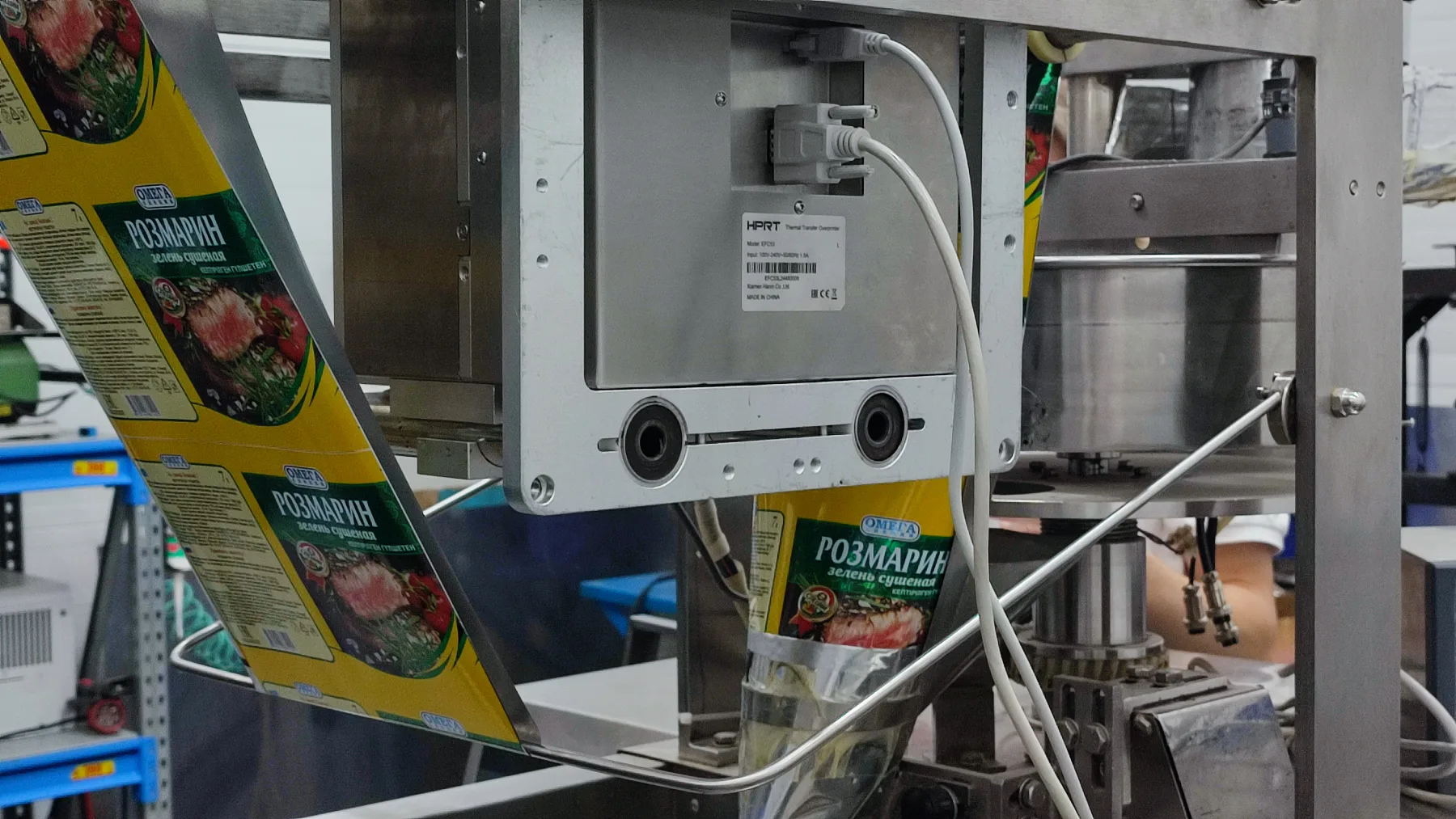
Based on the test results, TTO was chosen for this task. Thermal transfer printing is designed specifically for flexible packaging materials: the printer transfers the image from the ribbon directly onto the film, producing a high-contrast, easily readable code and text.
The implementation took place in several stages:
Installation: the HPRT thermal transfer printer was mounted directly on the filling machine. The line's design was hardly changed.
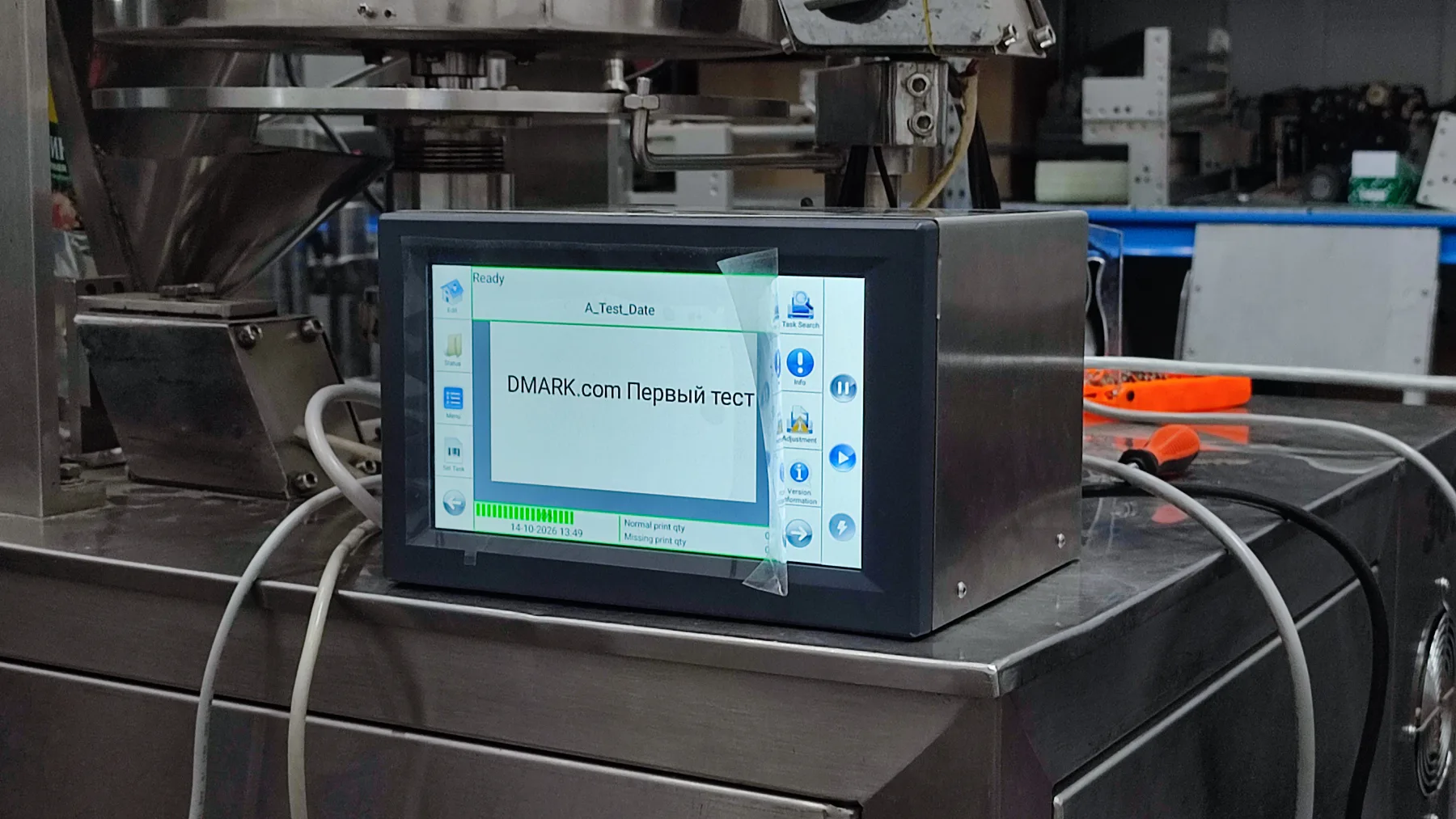
Integration: the printer was connected to the DMARK software, which sends marking codes and variable data for printing.
Commissioning: printing was configured for the customer's materials and packaging format, and stable operation as part of the line was verified.
Training: employees were trained to work with the software and equipment.
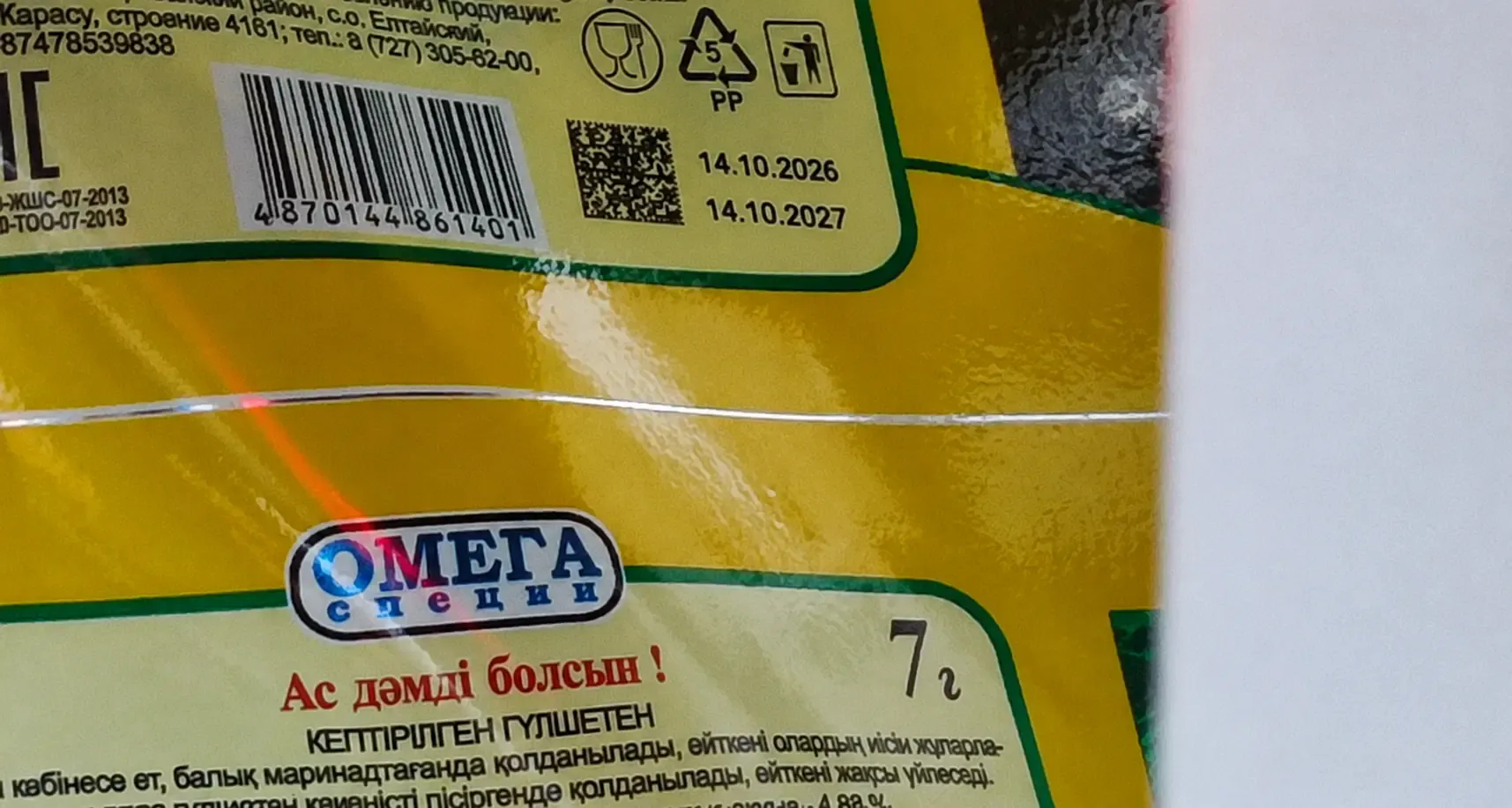
Now the DataMatrix code, production date and expiration date are printed on the packaging during the filling process, with no separate operation and no manual application.
Result
The thermal transfer printer operates as part of the existing Omega-Spetsii packaging line. Marking is applied directly to the flexible packaging during filling, while code management and printing are handled through the DMARK software. The line's design was left virtually unchanged, and staff have been trained to work with the new system on their own.
When thermal transfer printing is the right fit
The Omega-Spetsii case clearly shows where TTO delivers the best results. A thermal transfer printer is a good fit if a production operation:
packs products into film, bags, foil or onto labels;
operates vertical and horizontal packaging machines;
prints marking codes, dates, batch numbers and other variable data;
wants to integrate marking into an existing line rather than buy a new one.
If you work with similar packaging, we can test printing on your materials before implementation.